Parking


Background
Pillar Point Harbor is both a premier coastal destination and an active waterfront, drawing thousands of locals and visitors for recreational water activities, recreational and commercial fishing, dining, shopping and exercise. Historically, during busy periods such as the Salmon or Crab Opener, Bluefin running, special events or sunny weekend afternoons, parking would quickly exceed capacity, leading vehicles to park on the shoulders of Highway 1, creating safety hazards for pedestrians crossing highway traffic to reach the waterfront.
The District recognized an essential need to permanently expand off-highway parking capacity to support coastal access, protect visitor safety and sustain our working harbor. To replace parking removed during Caltrans’ Route 1 rehabilitation and bike lane project, the District proactively partnered with Caltrans to develop a permanent off-highway solution. By building a dedicated lot on the District’s C-4 Parcel near Surfer’s Beach, this collaboration resolves longstanding safety concerns while protecting coastal access and sustaining our working harbor.
Proposed Parking Area
Located on the District’s C-4 parcel west of Highway 1 (above the public launch ramp), the new parking area prioritizes safety for local fishermen, boaters, residents and visitors. By keeping vehicles off the highway shoulder, it significantly reduces the need for pedestrians to cross fast-moving traffic to reach the coast. The District has actively coordinated with partner agencies, including Granada Community Services District, Caltrans, Mid Coast Community Council, City of Half Moon Bay and local businesses to ensure the project supports the entire coastside. The design includes approximately 100 free public parking spaces, 23 of which will be equipped for EV charging. It also includes 14 regulated RV spaces.


Project Timeline
- Feb. 2024 (Caltrans Initiates Hwy 1 Bike Lane Project): The Caltrans Route 1 Multi-Asset Roadway Rehabilitation Project was proposed to renovate existing pavement and improve safety infrastructure in the County.
- Nov. 2024 (District Partners with Caltrans): The District issued a letter to the Coastal Commission informing the CCC of cooperation with Caltrans with respect to parking on the Coastside.
- Dec. 2024 – Feb. 2025 (Initial Concept and Location Selection): The Harbor District Board introduced the parking area project concept publicly during its Dec. 18, 2024, and Feb. 19, 2025 Board meetings, followed by dedicated discussions with the Mid-Coast Community Council.
- Aug. 2025 (Project Engineer Selected): The SMCHD Board approved hiring CSWST2 engineering firm to help with design, engineering and permitting.
- Nov. 2025 (Selection of C-4 Site): The District selected C-4 as the preferred location for the parking project.
- Sept. 2026 (Conceptual Planning and Environmental Studies): The project is in early preliminary design. Plans focus on advancing the District’s environmental mission through a low-profile design that respects the coastal environment and fits naturally into the landscape.
- Nov. 2026 (Hwy 1 Shoulder Parking Eliminated): Caltrans will begin installing “No Parking” signs along Highway 1 between Capistrano Road and Coronado Street. Once signs are installed, the California Highway Patrol will begin parking enforcement.
- Spring 2027 (Environmental Review (CEQA): Publication of environmental draft studies and formal public comment period.
- Summer of 2027 (Design Review & Permits): Formal submission under the site’s CCR/DR/CD zoning overlay for San Mateo County Design Review and California Coastal Development Permit (CDP) approvals.
- Spring/Summer 2028 (Construction Start): Targeted construction start following permit approvals.
View official project documents
Watch the previous information meeting
Frequently Asked Questions
Demand for parking at Pillar Point Harbor exceeds the District’s existing capacity, especially during sunny days and times of heavy use of the public launch ramp. This has resulted in vehicles, trucks and trailers parking on the shoulder of Highway 1, an unsafe and dangerous practice. To address this safety concern and serve the public using Pillar Point Harbor, the District has proposed expanding its parking capacity with a safe, long-term parking solution west of the Highwa
Caltrans’ involvement stems from a Coastal Commission requirement to replace 75 parking spaces lost during the Route 1 Multi-Asset Roadway Rehabilitation Project.
Prior to the Route 1 Multi-Asset Roadway Rehabilitation Project, the State withheld parking enforcement along Highway 1 and allowed the public to park on the shoulder in non-emergency situations. With the Rehabilitation Project and the addition of Type One Bike Lanes, Caltrans has installed “No Parking” signs along the roadway with no parking on the shoulder being enforced. To address parking impacts near Surfers Beach, Pillar Point RV Park, Sam’s Chowder House, Hotel Beach, and the Harbor District, the District proactively coordinated with partner agencies to lead a safe, long-term parking solution. Working with Caltrans and the Coastal Commission, the Harbor District’s Pillar Point Harbor C-4 Parking Project was able to satisfy the replacement of 75 parking spaces and add other community benefits. To assist the District in the construction of the C-4 Parking Project, Caltrans agreed to contribute $150,000 toward the construction of the project.
Caltrans will begin installing “No Parking” signs along Highway 1 between Capistrano Road and Coronado Street in November 2026. Once these signs are installed, the California Highway Patrol will begin actively enforcing the parking prohibition.
Construction is targeted to start in Spring/Summer 2028, following the completion of environmental reviews, the consideration of public input, the approval of designs and plans and the issuance of all required permits.
The project must complete its environmental review (CEQA) in Spring 2027 and secure site design review approvals from San Mateo County along with a Coastal Development Permit Amendment from the California Coastal Commission before construction begins.
The project will provide free, safe, convenient, accessible and legal parking options available to all residents and visitors enjoying the San Mateo coast.
Alongside free visitor parking, the project includes dedicated RV spaces projected to generate $350,000 to $450,000 in annual revenue. These funds will be directly reinvested into SMCHD operations to support essential community services, including coastal search and rescue, environmental stewardship and the upkeep of public trails, restrooms and harbor infrastructure.
Priority for the RV spaces will be given to fishermen operating out of Pillar Point Harbor, providing an affordable housing option while they are actively fishing out of the Harbor.
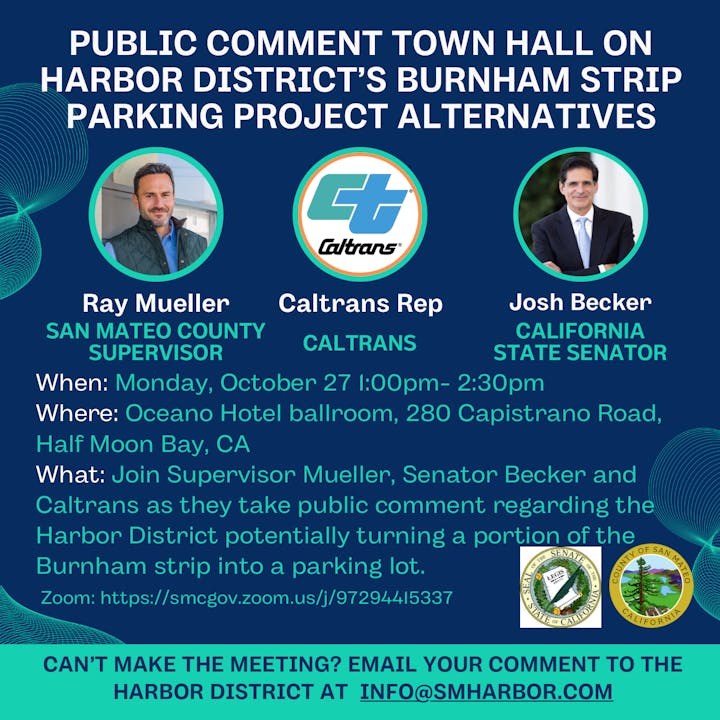
The District selected the C-4 parcel on the west (ocean) side of Highway 1 above the Launch Ramp, over the originally preferred Burnham Strip location due to several critical operational, safety and financial factors:
- Site capacity: Initial engineering evaluations revealed that the Burnham Strip was too small to accommodate the number of parking spaces and the wide turning radii required for boat trailers. In contrast, the C-4 parcel offers sufficient acreage to meet full capacity needs and provides convenient, direct access to the launch ramp.
- Pedestrian safety: Located on the ocean side of Highway 1, the C-4 site keeps all vehicle and trailer traffic within the commercial harbor boundary and eliminates the need for pedestrians to cross fast-moving highway traffic to reach the coast.
- Taxpayer savings: Because the District already owned the C-4 property, choosing this site saved millions in taxpayer dollars. Utilizing the Burnham Strip would have required purchasing expensive adjacent private land to expand its footprint.
- Protection of existing revenue: The C-4 parcel was vacant land, allowing the District to build the facility without disrupting existing business agreements or leasing revenues that fund essential District operations.
The design includes approximately 100 free public parking spaces, 23 of which are equipped for EV charging. It also includes 14 regulated RV spaces. The area’s size comfortably accommodates high-demand traffic, keeping vehicles and boat trailers safely on the ocean side of the highway and integrated with current harbor services.
On-site features include ocean-view benches, native landscaping and eco-friendly permeable surfaces designed to protect coastal scenery. The parking area also serves as a central launch point for the area, offering visitors easy access to local restaurants, harbor shops, public beaches and fishing piers.
Because the C-4 parcel is a highly valuable piece of prime coastal real estate, the District recognizes that creating a dedicated parking area eliminates the opportunity for future revenue-generating developments. To offset this loss and ensure financial stability, the District plans to incorporate 14 regulated RV spaces into the C-4 parking area design, which is projected to generate approximately $350,000 - $450,000 annually. This approach enhances the District’s ability to sustainably fund critical public operations, like Search and Rescue services, trail and harbor maintenance and environmental support.
The parking area is designed to enhance the environment and have minimal effects on neighborhood views. It will be built with a low-profile design that respects the coastal environment and naturally fits into the landscape.
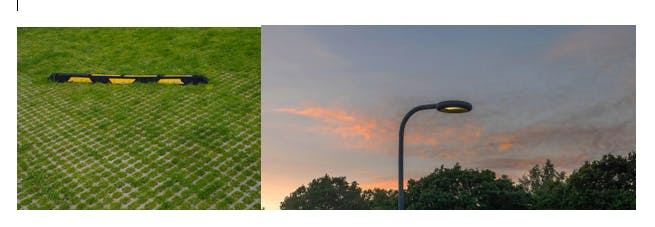
The project will feature permeable surfaces (no pavement), incorporate ocean-view benches, include 100% native landscaping and use designated dark-sky-compliant lighting to protect local wildlife and preserve views.
Developed in collaboration with the Coastside community, the project’s primary purpose is to expand the District’s overall parking capacity to meet coastal demand safely, eliminating hazardous and illegal parking along the Highway 1 shoulder. This preserves safe access to beaches for residents and visitors, supports the local economy by ensuring local businesses have safe and accessible parking options and generates revenue to support District operations, including search and rescue services and maintenance of the harbor and trails.